Pukapa Way a Mikyunfpi    Six Poems for Listening

Kxì, ma frapo.

I’ve now received some great Na’vi recordings from members of our lì’fyaolo’, which I’ll be delighted to present to you, in the order in which I received them, in this and subsequent blog posts. As before, I’ll first post the spoken Na’vi only, urging you to see how much you can understand just through listening. Then I’ll publish the Na’vi text and English translation in the next post.

The first contribution is from our own Neytiri: six brief, evocative poems about Pandora and Na’vi life. Rather than me telling you about them, I’ll let Neytiri do that in her own words:

 “[Oeyä aywayri,] txampxì lu waytsyìp a teri Eywa’eveng sì reyfya leNa’vi. Oe fmoli ngivop fyina aywayt a tsari lam fwa nìngay zola’u ftu Eywa’eveng.

 “The bulk of these way are my attempt making a traditional, ‘indigenous’ short poetry form for Na’vi, like a haiku, or the Filipino tanaga. The skeleton is the structure of the Spiral Song’s beginning. I loved the rhythm . . . :

Pamtseol [Pamtsewl] ngop ayrenut
ronsemä tìfnu
Tengfya ngop säftxuyul
Mì hifkey.

“So [the first three of] these way have four lines, with syllables of 6, 6, 6, 3. [The fourth has two such stanzas: 6, 6, 6, 3; 6, 6, 6, 3.—PF] Other things like rhyme scheme and the exact stress pattern vary. I also liked the idea of them being similar in that the last 3 syllable line carries the ‘punch’. Sometimes it’s mystery, excitement, danger, or some kind of twist in the tone. Most importantly, however, they had to be truly Pandoran; they all must either describe a natural Pandoran scene, or a piece of Na’vi culture. The hammock poem [#4] is about a real Na’vi tradition of respectfully burning an old swaynivi, for example. There are some other styles in there that could make for some good listening exercises, like Vultsyìp Atsleng [#5] (can you guess what it’s about? 😁).

“I think that Na’vi poetry is the most beautiful because of the kato and pamuvan possibilities, and that’s what I try to play around with the most.”

Just one more thing: As I’ve said previously, in any language, poetry is more difficult to follow than prose. After all, what is poetry but the extraordinary—not the ordinary—use of language! So don’t be discouraged if you find Na’vi poetry challenging. Listen to the recordings as many times as you need to, check the dictionary when necessary, and I bet you’ll get a lot out of them.

Fayway ayngane zivawprrte’!

Way A’awve:


Way Amuve:


Way Apxeyve:


Way Atsìve:


Way Amrrve:


Way Apuve—Loreyu:


Makto zong slä ro helku ’ì’awn.

Hayalovay.

Posted in General | 2 Comments

Mipa Säwäsultsyìp! A New Contest!

Kaltxì nìmun, ma smuk.

I hope everyone is managing as well as can be expected during these difficult times.

I have three things to mention to you today:

First and foremost, we’re having another Na’vi writing contest! As with past contests, this new one is organized not by me but by members of the lì’fyaolo’ and will be judged by them as well. As before, I’ll be delighted to publish the winning entries here on the blog.

Here are the rules and details from our tsmuke alu Alyara:

We would like to announce the start of this year’s Na’vi Writing Contest!
The rules are simple:

  1. All submissions must be original works and completely in the Na’vi language.
  2. Your submission may be in the form of an essay (limit: 1,000 words), a short story (limit: 1,500 words), or poetry (limit: 500 words).
  3. You have your choice of two themes: either (1) the more specific topic of the myths, tales, and legends of the Na’vi people; or (2) the broader subject of friendship, and what it means to you. (Please note: Lightstorm has asked us to refrain from speculative writing about any future events that might be addressed in the upcoming films.)
  4. Please categorize yourself as a beginner or intermediate/advanced learner, since we will be judging submissions at these levels separately.
  5. All works will be assigned random numbers by a third party before blind judging.
  6. Only one submission per author, please.
  7. Prizes awarded may vary depending on participation.
  8. All entries must be received by Friday, April 17th.
  9. Email your submissions as attachments to:
    zlepperburgart (AT) gmail (DOT) com

Furia inan ayngeyä aysängopit leNa’vi, oe srefereiey nìprrte’!

Second, let me post the Na’vi text and English translation for the listening exercise in the previous post:

Na’vi text:

Ma eylan ayawne, kaltxì.

Sìlpey oe, ayngaru livu fpom nìwotx. Tsyanur sì oeru leiu fpom sì fra’u a kin.

Kezemplltxe, talun tìvirä fìsäspxinä alu koronavirusì, lolatängem kifkey, lolatängem tìrey. Ulte zusawkrrìri txopu si tute apxay. Kxawm set ’u angäzìk frato lu la’a ayll. Zene awnga ro helku ’ivì’awn. Ke tsun wrrkivä fte tìkangkem sivi. Ke tsun mäpiveyam fìtsap.

Ha new oe ayngaru pivlltxe san Siva ko! Fìsäspxinìl ke txayung awngey sìreyti tì’i’avay krrä. Aysìngäzìk lefkrr ’ayìp, srayer nìmun tìrey letrrtrr.

Tsakrrvay, ma smuk, rutxe livek aysänumet sì horenit amip. ’Ì’awn ro helku pxìm txantxewvay. Yur mesyokxit alo apxay krrka trr. Ftu sute alahe fmi neto rivikx nì’it. Ulte txo smivon ngar ayhoaktu, ftxey soaiamì ftxey sko eylan, foti palang fte tsivun ivomum teyngta ftxey lu foru fpom fuke.

Fmal tìkxuket, ma eylan, ulte var livu lefpomtoxk.

Eywa awngahu nìwotx.

English translation:

Hello, dear friends. I hope you’re well. John and I are fine and have everything we need.

Needless to say, due to the coronavirus, the world has changed, life has changed. And many people fear for the future. Perhaps the most difficult thing of all right now is the social distancing. We have to stay at home. We can’t go out to work. We can’t hug each other.

So I want to say to all of you: Courage! This disease will not disrupt our lives forever. The current difficulties will vanish, ordinary life will appear again.

In the meantime, brothers and sisters, please follow the new guidelines and rules. Stay home as often as possible. Wash your hands many times a day. Keep back a bit from other people. And if you know older folks, whether in your family or as friends, contact them to find out if they’re well.

Stay safe, friends, and stay healthy.

May Eywa be with us all.

And lastly, tstunkem si oer rutxe, ma eylan.

tstunkem (n., TSTUN.kem) ‘favor, act of kindness’

This word is derived from tstunwi ‘kind’ + kem ‘action, deed.’ Although written tstunkem, it’s usually pronounced tstungkem.

tstunkem si (vin.) ‘do a favor’

tstunkemtsyìp (n., TSTUN.kem.tsyìp) ‘little favor’

Tstunkem si oer rutxe.
‘Please do me a favor.’

Tung oer futa vin tstunkemit ngata.
’Let me ask you a favor.’

Some months ago I asked for submissions of material for listening exercises, and a few of you were kind enough to answer the call and send me some fine work. Unfortunately, due to circumstances at the time, I didn’t follow through with posting these submissions, for which I apologize. But I’d like to begin doing that now. Ha tung oer futa vin tstunkemit ayngata. If you still have the emails you originally sent me, which I hope you do, could you please resend them along with the attachments? I’d really appreciate it. As I think you all know: frommer (AT) marshall (DOT) usc (DOT) edu  Irayo nìtxan.

Stay safe and healthy, everyone.

Hayalovay.

Posted in General | 7 Comments

Teri Tìfkeytok Lefkrr … About the Present Situation …

A little message to all my friends in our lì’fyaolo’: (New vocabulary is explained below.)


tìvirä
(n., tì.vi.RÄ) ‘spread, proliferation’

wrrkä (vin., wrr.KÄ, inf. 2,2) ‘go out, go outside’

txung (vtr.) ‘disturb, disrupt, bother, affect negatively’

Note the following common expression:

Oey fpomit txung rä’ä!
‘Don’t bother me!’

palang (vtr., PA.lang, inf. 1,2) ‘contact (in a social sense), communicate with’

Derived noun:

tìpalang (n., tì.PA.lang) ’(social) contact’

Pohu ke lu oeru kea tìpalang kaw’it.
’I have no contact with him whatsoever.’

Also note this useful expression:

Palang ko!
‘Keep in touch!’

BTW, if anyone would like to leave a comment about how you’re doing and how things are where you are, either in English or in Na’vi, that would be fine.

Stay safe, my friends. Hayalovay.

ta Pawl

Posted in General | 6 Comments

Some Words for Leap Year Day

Kaltxì, ma frapo!

Is it already Leap Year Day? It’s hard to believe! Kä krr pesengne?

Here are a few new words I hope you’ll find useful:

smaw (vtr.) ‘approve of’

Fayhemit oel smaw nìwotx.
‘I completely approve of these actions.’

natxu (vtr., na.TXU, inf. 1,2) ‘disapprove of’

Oel ngeyä tìhawlit natxu ulte tsawä wasyem.
‘I disapprove of your plan and will oppose (fight against) it.’

Derived nouns:

tìsmaw (n., tì.SMAW) ‘approval’

Moeyä tìmuntxari tìsmaw ngeyä oeru teya si.
‘Your approval of our marriage fills me (with joy).’

tìnatxu (n., tì.na.TXU) ‘disapproval’

la’um (vin, LA.’um, inf. 1,2) ’pretend’

Plltxe po san nga yawne lu oer sìk, slä la’um nì’aw.
‘He says he loves you, but he’s only pretending.’

This intransitive verb is used with tsnì:

Lumpe nga la’um tsnì ke tsun srivew?
Why are you pretending (that) you can’t dance?’

Derived noun:

tìla’um (n., tì.LA.’um) ‘pretence’

Furia ke tsun tìkangkem sivi, peyä säspxin lu tìla’um nì’aw.
‘As for not being able to work, his illness is only a pretence.’

tsaktap (n., TSAK.tap) ‘violence’

letsaktap (adj.) ‘violent’

tsaktap si (vin.) ‘be violent, use violence’

Tsaktap rä’ä si kawkrr mungwrrtxo ke livu kea fya’o alahe.
‘Never use violence unless there is no other way.’

Note in the previous example:

mungwrrtxo (conj., mung.WRR.txo) ‘unless, except if’

As in the example, this conjunction is usually used with the subjunctive (here, livu). In casual conversation it’s usually pronounced mungwrrto.

Make sure you distinguish between mungwrrtxo and mungwrr fwa ‘except that’:

Poru ke poleng oel ke’ut mungwrr fwa Ralul ke tsatsenget.
’I told her nothing except that Ralu wasn’t there.’

And a note about colloquial grammar:

In casual conversation, tok can be omitted when it’s easily understood. The nouns, however, still retain the same case marking they would have if tok were present. For example:

Pol tok fìtsenget.  –> Pol fìtsenget.
‘He’s here.’

Pol ke tok fìtsenget. –> Pol ke fìtsenget.
‘He’s not here.’

I have a lot of great submissions for listening exercises that I still haven’t gotten to, but I will. Rutxe maweypivey nulkrr nì’it, ma eylan. 😊

More soon, I hope.

Hayalovay!

Posted in General | 15 Comments

Tengkrr Zìsìt Leratem . . .   As the Year Changes . . .

Kaltxì, ma frapo.

As the year changes, I want to take this opportunity to thank you all so much for being part of our lì’fyaolo’—a wonderful language community comprised of creative, supportive, dedicated people who are keeping Na’vi alive and flourishing. Furia var aynga nìwotx fìlì’fyati sivar ulte tsar srung sivi fte ’ivong lu txana meuia oer. Irayo, ma smuk.

I now have some excellent listening exercises that several of you have contributed, which I’ll publish here in the near future. For now, though, just a few new words before 2019 officially ends, at least here in California:

lìktap (adj., LÌK.tap) ‘crooked’

This word is the opposite of yey ‘straight.’

Ke tsun fko fìswizawti sivar—lu lìktap.
’This arrow can’t be used—it’s crooked.’

ventil (n., VEN.til) ‘ankle’

Similar to the other –til words we’ve seen—kinamtil ‘knee’ and pxuntil ‘elbow’—ventil is derived from venu ‘foot’ + til ‘joint.’

hupx (vtr.) ‘miss, not hit a target’

Hupx is the opposite of takuk in its sense of ‘hit a target.’

Txewìl yerikit kolan slä hängupx.
’Txewì aimed at the hexapede but unfortunately missed.’

In this example, note that you don’t have to repeat the perfect infix <ol>, since the completion aspect has already been established by kolam. It wouldn’t be wrong to say holängupx, but it’s not necessary.

And two words for living areas or collections of dwellings larger than a tsray ‘village’:

tsawtsray (n., TSAW.tsray) ‘small or medium-sized city’

From tsawl ‘large’ + tsray. The l dropped over time.

txantsawtsray (n., txan.TSAW.tsray) ‘large city, metropolis’

Mipa Zìsit Lefpom, ma frapo! Eywa ayngahu nìwotx frakrr.

Edit 1 Jan.: *kolam –> kolan  Irayo, ma Stefan!
Posted in General | 18 Comments

Vurway Alor—A Beautiful Narrative Poem

Kaltxì, ma frapo.

It’s my pleasure to present to you, as a listening exercise, an evocative narrative poem by our Tsyili. The recording is by the author and Tirea Aean.

In any language, poetry is more difficult than prose. So don’t be surprised or disturbed if you find this challenging. Listen to the recording several times to get as much as you can out of it. Then compare it to the Na’vi text. Finally, check the translation, which Tsili herself supplied, to see how much you understood.

Here’s the recording:


Text

atan trrä salew
ta tsyili

fìtxon’ongä atan herum nìwin io tsray
a lu tsaru frahapxìtu a fìtsap näpìn leymfe’sì.
ronsemmì aylì’u fey ‘ì’awn na txewma fpeio afpxamo.
heyn po kilvanä paytxewlok, wem wä sngawpay.
tsakilvanä pay wew lu.

fìtxon’ongmawä atan herum nìk’ong ftu
frakrr peyä soaiä kelku a fayramti tarmok.
meyam pol afpawngti a ke tsolun kawtu srivu’.
tsìk peyä hiyìka ‘oneo a fnu nìwotx kllwo tìfmetok.
peyä ran mawey slu.

raw emkäfya tskawr po.
fìkilvanä pay vawm slu mì seng alìm.
nìsyep fol peyä aysäfpìlti fyep.
tìng nari po ne fìsalewfya ulte zawng.

na sa’nok a fe’pey rol ayyayo.
virä tsatxansngum fte mivam ayutralpxaw.
txansngum si fraioang tengkrr neto po tskawr.
sunkesun sop po.

fraioang syeraw, san
pesengne po kerä.

[collapse]


English translation

the light of day passes
by tsyili

the light of sunset is leaving quickly over the village,
whose every member look at each other and complain.
their1 words remain in the mind like a terrible scary challenge.
they2 sit by the river’s shore, fighting tears.
that river’s water is cold.

this light after sunset leaves slowly through these mountains where their2 family’s house
has always been.
they2 hug grief that no one could crush.
suddenly in front of their strange form that is completely quiet, a test alights.
their essence becomes calm.

they2 limp down to the river.
this river’s water becomes dark in far away places.
they1 tightly trap their2 thoughts.
they look toward this direction and scream.
the birds sing like a mother who dreads.
that desperation spreads to wrap around trees.
every animal worries while they2 limp away.
like it or not, they2 travel.

every animal is calling,
“where are they2 going?”

they1: the villagers.
they2: the subject of the poem, a singular person.

[collapse]


I’d love to post more listening exercises! Have you written something in Na’vi—even if it’s very simple!—that you’d like to record for Na’viteri? If so, please send it to me along with your recording and I’ll consider it for posting. And just to reiterate, don’t be afraid to make it concise and simple! We need listening exercises at all levels—beginning, intermediate, and advanced.

Fìvurwayri alor sì stä’nìpamìri tseyä irayo nìtxan, ma mesmuk!

stä’nìpam (n., STÄ’.nì.pam) ‘recording’

This word is a simple compound of stä’nì ‘catch’ and pam ‘sound.’ When you record something, you catch its sound and preserve it rather than letting the sound fly away. (As with other technology-related terms such as eltu lefngap, this word obviously entered the Na’vi language after the Na’vi became familiar with the Sawtute and their devices.)

stä’nìpam si (vin.) ‘to record’

Säftxulì’u atìtxurnga’ nìtxan nang! Furia tsaru nga stä’nìpam soli, irayo.
‘What a powerful speech! Thank you for recording it.’

Hayalovay!

Posted in General | 6 Comments

Choice Statements vs. Choice Questions. And some insults.

Kaltxì, ma frapo!

I’ve had a few grammatical discussions with some of our sulfätu lì’fyayä that I wanted to share with you. I’ll begin here with one about “choice questions,” and report on the others in subsequent posts.

Then, as a relief from the grammatical complications, we’ll conclude here with some fun stuff.

First, the grammar issue. The question—and a very good one—was posed by both Eana Unil and Tirea Aean. I hope Tirea doesn’t mind if I quote him verbatim:

Ta Tirea Aean a tìpawm:

What is the best way to construct a choice-among-options question, e.g., “X, or Y?”

Currently, the only known methods to create a question are srak and -pe+. We realized that these don’t quite cover questions of the form “Should I stay or should I go?”, “Do you want to do X, or Y?”, etc. It’s our understanding that utterances such as Nulnew ngal fì’ut fu tsa’ut are statements even if there is a question-like intonation. Particularly for an option set where the options are not mutually exclusive, there is no real way to make it known that this is intended to be a question. What are your thoughts on this?

Oeyä tì’eyng:

We do it as follows: For a choice statement, use fu once, as you’ve indicated. For a choice  question, use it twice, before each of the two choices. For example:

STATEMENT:
Nulnew oel fì’ut fu tsa’ut.

‘I want this or that.’
(In other words, I’ll take either choice—they’re both OK.)

QUESTION:
Nulnew ngal fu fì’ut fu tsa’ut?
‘Do you want this or that?’
(That is, ‘Do you want this, or do you want that? What’s your choice?)

When fu appears before the first choice, it signals a question.

A Complication

[Edit Oct. 1
Note: I’ve revised this section to reflect the insights of two of our sulfätu lì’fyayä, Wllìm and Tirea Aean. Irayo, ma mesmuk!]

There’s an added complication in this area: the “A or B” structure is actually ambiguous in English. For example, suppose I asked you, “Have you studied Greek or Latin?” I could be asking two different things. One might be, “I know you’ve studied one of those two languages. Which one is it?” That would be a choice question. The other would be something like, “Is it the case that you’ve studied one of these two languages, Greek and Latin?” We can call that a non-choice question. See the difference? It’s a little hard to pin down, but the two interpretations ask different things. Interestingly, the sentence is only ambiguous in written form; in spoken English, the intonation is different for the two interpretations. (Do you agree?)

Not all languages have this ambiguity. In Mandarin Chinese, for example, there are two different expressions for ‘or,’ which are used for the two different interpretations. You’ll find a nice explanation here. (Scroll down to the section headed或者 in questions. The coffee-tea examples are especially clear.)

Na’vi, unlike Mandarin, only has one word for ‘or’, fu, but it resolves the ambiguity in a different way. The non-choice question is actually a yes-no question. Going back to our previous example, it’s equivalent to saying, “Is it the case that you’ve studied one of these two languages, Greek and Latin? Yes or no?” And as a yes-no question, it requires srake/srak.

Examples:

CHOICE QUESTION:
Nulnew ngal fu fì’ut fu tsa’ut?
‘Do you want this or that?’
That is, “Which do you want—this or that?”

NON-CHOICE QUESTION:
Srake nulnew ngal fì’ut fu tsa’ut?
‘Do you want this or that?’
That is, “Is it true that you want either this or that?”

And now for the promised fun stuff. 🙂

We already know a number of ways to express affection for people in Na’vi. We have, for example, yawnetu and yawntu ‘loved one,’ yawntutsyìp ‘darling,’ paskalin ‘adorable one’ (literally, ‘sweet berry’), and parultsyìp ‘little miracle’ (a term of affection for children). But how do you express the opposite sentiment? How do you insult someone?

Kezemplltxe, we have the famous word skxawng ‘moron, idiot.’ We can also call someone a fnawe’tu ‘coward.’ And there’s the very insulting, vulgar word vonvä’, which we’ve translated in English as ‘asshole.’ Here are a few more items to add to that list.

teylupil (n., TEY.lu.pil) ‘teylu-face’

A number of insults denigrate people’s faces. (In English, we have several compounds where “face” is the second element: ____face. You can probably think of some ways to fill in the blank.) This somewhat childish Na’vi insult actually degrades someone’s facial stripes, implying they look like beetle larvae, which is not a compliment.

kalweyaveng (n., kal.WEY.a.veng) ‘son of a bitch’

This insult derives from kali’weya, a species of poisonous arachnid, and eveng ‘child.’ So calling someone a kalweyaveng is calling them the child of a poisonous spider. The closest expression we have in English that insults someone’s lineage is probably ‘son of a bitch.’

txanfwìngtu (n., txan.FWÌNG.tu) ‘bastard, loser’

You already know the word fwìng ‘humiliation.’ Adding txan– at the beginning and –tu at the end yields a word that refers to someone of extremely low social standing, a humiliated person, one who has totally lost face, the lowest on the totem pole. It’s used as a term of derision. Perhaps the closest equivalent in English is ‘bastard,’ at least in its original sense of someone born in a degrading manner. Txanfwìngtu also has the sense of ‘loser,’ but it’s much stronger than that English word.

And finally,

kurkung (n., KUR.kung) ‘asshole’

This is close to vonvä’ but even more vulgar and insulting. It’s a compound of kuru ‘queue’ and kung ‘putrid, rotten.’

kung (adj.) ‘putrid, fetid, rotten’

Kung can refer to rotten meat or a pile of dead and rotting animal matter in the forest.

Tsafahew aonvä’ ftu kunga ioang za’u.
‘That stinking smell comes from a rotten animal.’

To call someone’s queue rotten is a powerful insult.

Sìlpey oe, aynga ke zìyevene faylì’ut sivar pxìm nìhawng!

Until the next time . . .

Edit 2 Oct: In the example sentence for kung, rotting –> rotten. Irayo, ma Plumps.
Posted in General | 25 Comments

’A’awa Lì’u sì Lì’fyavi Amip. A Few New Words and Expressions.

Kaltxì ma frapo,

Tengkrr lerok zìskrrsomìl tì’i’at, sìlpey oe, ayngari te’lan livu lefpom ulte tìrey zivawprrte’.

We haven’t had any new vocabulary in a while, so here are a few words and expressions, along with a couple of idioms, that I think you’ll find useful.

kantseng (n., KAN.tseng) ‘destination’

This word is, of course, derived from kan ‘aim’ + tseng ‘place.’ Your destination is the place you aim for.

Ngeyä fìtìsopìri pehantseng?
‘This journey of yours—what’s its destination?’

la’a (n., LA.’a) ‘physical separation, distance between two places or objects’

Don’t confuse la’a with lìm. The verb lìm ‘be far’ and the derived adverb alìm involve something being relatively far away rather than close: ’Ì’awn alìm! ‘Stand back!’ (That is, ‘Remain relatively far away.’) Sim ‘be near’ and asim ‘nearby’ work in a similar fashion. La’a, on the other hand, is neutral as to whether something is near or far; it simply refers to the separation between two places or things. The idiomatic way to ask how far A is from B is simply: Ftu A ne B pela’a?

Ftu Kelutral ne Txintseng Sawtuteyä pela’a?
‘How far is Hometree from Hell’s Gate?’

pela’a (inter., pe.LA.’a) ‘how near, how far, what distance’

As you might suspect, we also have the variant la’ape (inter., LA.’a.pe) meaning the same thing.

NOTE: Alternate terms for pela’a and la’ape are:

pelìmsim (inter., pe.LÌM.sim) ‘how near, how far’

and its variant lìmsimpe (inter., LÌM.sim.pe). These are used in the same way as pela’a, although pela’a is the more common expression.

keynven (vin., keyn.VEN, inf. 1,1) ‘step’

This intransitive verb is clearly derived from the transitive verb keyn ‘put down’ + venu ‘foot.’ When you step, you put down your foot.

Nari si tengkrr kereynven fìtseng. Lu kllte ekxtxu.
‘Step carefully here. The ground is rough.’

As you see in the preceding example, one way to express the idea ‘Do X carefully’ is to say ‘Be careful as you’re doing X.’ Since that’s a bit long-winded, a simpler idiomatic expression has arisen: Nari si+ V (root form).

Nari si keynven!
‘Step carefully!’

Nari si lonu swizawit.
‘Release the arrow carefully.’

Also note this idiom:

Po keynven sìn ketse.
‘He is socially awkward. (Literally, He steps on tails.)’

Speaking of idioms, here’s another one I think you’ll find useful:

To express your regret that someone couldn’t attend a meeting or event:

Ngari keftxo fwa ke tok.
‘We missed you. Sorry you couldn’t make it. Too bad you couldn’t be there.’

Literally, this is saying, ‘It’s sad that you weren’t there,’ with the object of tok unspecified. A shorter and more colloquial way to say this is to omit fwa:

Ngari keftxo ke tok.

ralke (adj., RAL.ke) ‘meaningless, devoid of content’

Derived from ral ‘meaning’ + (lu)ke ‘without,’ ralke is the opposite of ralnga’.

Txewì ka trro nìwotx ftxolulì’u, slä aylì’u peyä längu ralke.
‘Txewi spoke for an entire day, but sadly, his words were meaningless.’

Finally, we’ve had the adverb nìfkeytongay ‘actually, as a matter of fact, in reality’ for some time now, but not yet the words it’s related to. Here they are:

tìfkeytongay (n., tì.fkey.to.NGAY) ‘reality’

This comes from tìfkeytok ‘state, condition, situation’ + (a)ngay ‘true’: reality is the true situation. (Note that the k at the end of tìfkeytok has dropped just as it did in nìfkeytongay, making the pronunciation easier and smoother.)

Ayunil ngeyä lu lor, slä fìtxeleri lu tìfkeytongay keteng.
‘Your dreams are beautiful, but the reality of this situation is different.’

lefkeytongay (adj., le.fkey.to.NGAY) ‘real’

Similar to the evolution of nìfkeytongay, this word was originally *letìfkeytokangay. (See this blog post for a fuller explanation.)

Yune oet! Ke lu fìvrrtep tute lefkeytongay!!!
‘Listen to me! This demon is not a real person!!!’

A few grammatical things have come up that I’d like to share with you, but I’ll do that in another post.

Hayalovay, ma smuk!

Posted in General | 22 Comments

Mipa Ayewll, Mipa Ayioang—New Plants, New Animals

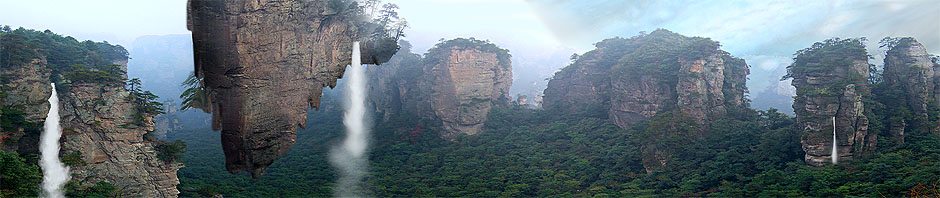
This post containing some new Pandoran plants and animals is based mostly on the diligent and excellent work of our own Txawey, who clearly devoted many hours to making this information easily available to the community. If I might quote what he wrote in his post to LearnNa’vi.org:

 “As some of you may know, I was recently in Mo’ara for a period on vacation with my family. While there, I downloaded the Play Disney app on a whim and found a game for Mo’ara while waiting in line. Said game had a decently large Pandorapedia, so I figured why not take a look at it! After I was finished, I found several new entries for things we didn’t have before. Since they were all on my phone, I took screenshots (over 200!) and figured why not type them up into a document, so here they are!”

Txawey’s 200+ screenshots, where you’ll be able to find pictures of all these flora and fauna, can be found here.

I’ll add some information on pronunciation and etymology, but the descriptions are taken from the Play Disney Pandorapedia, as typed up for us by Txawey. Ngeyä fìtìkangkemìri a kosman seiyi irayo nìtxan, ma tsmuk!

FLORA

fyìpmaut (n., FYÌP.ma.ut) ‘squid fruit tree’

This comes from fyìp+ mauti ‘fruit’

fyìp (n.) ‘tendril, tentacle’

NOTE: Although in careful pronunciation this word has three syllables, colloquially it’s usually pronounced with two: FYÌP.mawt

Taxonomy: Octocrus Folliculus
Anatomy: A massive jungle tree that produces a large seed-pod covered in spiny blue protrusions. The seed pod is also notable for its eight 60cm-long tentacle-like fruit stalks that grow from the bottom.
Ecology: A staple of the Na’vi diet, the fruit harvested from the squid fruit tree is very versatile and can be prepared in many ways.
Ethnobotany: Eaten raw, these tubular fruits have a consistency of a mid 20th-century Terran fruit snack and has a slightly salty rhubarb like taste. The fruit can also be cut into wheels and dried and cured into a portable fruit-leather that Na’vi travelers often take with them on long journeys.

koaktutral (n., ko.AK.tut.ral) ’goblin thistle’

Comes from koaktu ‘old person’ + utral ‘tree’

So named because of the hunched shape and stooped appearance of the tree. (NOTE: There’s a typo in the Disney Pandorapedia entry: the final l is missing. I’ll notify them and hopefully the error can be corrected.)

Taxonomy: Cobalus Carduus
Size: Growing up to 4m high, spread of 3.5-4m
Anatomy: Growing in a hunched shape and supported by prop roots and topped with passiflora, the stooped appearance of the goblin thistle is prevalent during the bioluminescence of the evening. Its leaves are a bluish color, and its trunk is twisted and a brownish-grayish color.
Ecology: The passiflora topped goblin tree grows in a hunched shape and is supported by propped roots. During the bioluminescence of the evening, the stooped appearance of the thistle is more pronounced.
Ethnobotany: There are at least 12 goblin thistles in Mo’ara.

lanutral (n., LA.nut.ral) ‘dandetiger’

Comes from lan+ utral

lan (n.) ‘resin’

Taxonomy: Candea Inflata
Size: 12-15m tall, slender trunk of 0.5-1m, crown of tree is 3.5-4.6m.
Anatomy: Large tree with inflated trunk, elaborate bark, and long, slender tubular leaves in a cluster at the crown. Produces abundant resin in the trunk, which accumulates in leaf tips. When resin builds up, leaf tips glow brightly, indicating that resin will be released.
Ecology: Serves important ecosystem function by absorbing atmospheric toxins, which combine with plant oils to produce resin.
Ethnobotany: Resin is collected for use as an adhesive by Na’vi.

paysyul (n., PAY.syul) ‘water lily’

Comes from pay ‘water’ + syulang ‘flower’

Taxonomy: Inrigo Lilliam
Anatomy: Large and multi-colored with bisected petals and a distended, vein pod like bulb/stigma. Can be found in standing and running fresh-water locations throughout Pandora.
Ecology: This lovely, freshwater flower has such an alluring scent and such a colorful array of petals that it’s a natural attractant for small river fauna. The Na’vi often string their woven nets underneath the flower in shallow waters to easily snare small fish.
Ethnobotany: After careful study, the Xenobiologists and Ethnobotanists from Earth witnessed the Na’vi using the inrigo lilliam as floating bait stations. Industrious adolescent Na’vi will go down to local lakes, rivers, and streams where the inrigo lilliam are found, dive into the waters with their tackle, and string woven nets underneath the shallow waters where the flower lie. With patience, these young Na’vi hunters are able to easily snare small fish and shellfish that come to feed off the aquatic root systems of the plant.

rumaut (n. RU.ma.ut) ‘cannonball fruit tree’

From rum ‘ball’ + mauti ‘fruit’

Note: Similarly to fyìpmaut, this word is colloquially pronounced RU.mawt. This tree is easily confused with the very similar-sounding rumut ‘puffball tree.’ The two trees are different.

Taxonomy: Ecdurus Putamen Pomus
Size: Fruit is roughly 70cm long
Anatomy: Deciduous, fruit-bearing tree in the Valley of Mo’ara. Its fruit has an ombre-coloring of yellow to orange to red to purple and is decidedly one of the most difficult fruits to eat on Pandora. The fruit from this tree is likened to the Terran coconut.
Ecology: When fully ripe, the cannonball fruit is a multi-colored pod that has an incredibly thick and tough outer husk. Na’vi harvesters will prepare their party for harvesting the cannonball fruit and begin the arduous task of cracking the outer husk to retrieve the succulent and sweet meat inside.
Ethnobotany: The Cannonball tree gets its name from the peculiar way the Na’vi interact with its titular fruit. The most common way of getting to the fruit is to climb to the highest height of the cannonball tree and launch the fruit from the highest branch. With the right velocity, the husk will crack and the Na’vi will be able to insert sharpened branches and crack open the shell to reveal the fruit inside.

tsawksyul (n., TSAWK.syul) ‘sun lily’

From tsawke ‘sun’ + syulang ‘flower’

Taxonomy: Stella Lilliam
Size: Flower up to 2m in height
Anatomy: Flower has primarily yellow petals, giving the opened flower a vaguely sun-like appearance. Other specimens have petals cut through with vibrant hues of magenta and cyan.
Ecology: A hearty multi-petalled bloom, this sun-loving flower is a common sight throughout the Valley of Mo’ara.
Ethnobotany: Ethnobotanists from Earth have found that this lovely flower (amongst other similar flora) is commonly used by Na’vi to create necklaces, rings, and other personal ornaments.

tumpasuk (n., TUM.pa.suk) ’celia fruit tree’

From tun ‘red-orange’ + pasuk ‘berry’

Note that while the primary stress is on the first syllable TUM, there’s secondary stress on PA. The stress pattern is the same as in the English word “strawberry.”

Taxonomy: Pampinus Bacca Acinum
Anatomy: Multi-trunked, deciduous tree with long, hanging vines from which grow massive seed pods.
Ecology: Squat, thick-trunked tree with multiple thick branches. It produces a 30cm long bulbous pod that holds a tendril-like strand of edible seeds/berries. A common food source for tetrapteron and prolemuris.
Ethnobotany: The Na’vi gather the seed berries by climbing into the trees, dangling upside-down from the branches and cutting the strand out of the pod from the inside. Another Na’vi will be under the pod on the ground and will catch the falling seed berry strand in a woven net to not damage the ripe fruit.

FAUNA

fyuatx (n., fyu.ATX) ‘anemonoid’

Size: Up to 2m in diameter
Anatomy: Invertebrate with small toxic tentacles for feeding. Bioluminescence in myriad of pastel colors.
Ecology: Small fish are attracted by bioluminescence into tentacles and eaten.

lortsyal (n., LOR.tsyal) ‘shimmyfly’

From lor ‘beautiful’ + tsyal ‘wing’

Size: Average size of up to 1m wingspan
Anatomy: Eight-winged insect with long antennae. Its body is built like Terran insects and divided into a head and thorax. The abdomen portion of the shimmyfly is constructed of two smaller vane-like hindwings and a long rudder-like tail.
Ecology: An iridescent and glimmering Pandoran version of the terran Lepidoptera (butterfly), this delicate creature gracefully flies through the Valley of Mo’ara on multiple glowing, almost crystalline wings.

nalutsa (n., na.LU.tsa)

Size: Average size of up to 40m long
Anatomy: Massive and armored with no visible dorsal fin, a single set of flippers and a long tail ending in jagged and flared flukes. A massive set of jaws that contain sword-length teeth for rending and tearing prey. Plated exoskeleton, not dissimilar to the shell of a turtle.
Ecology: A cousin of the more elusive and fierce akula, this six-gilled ocean behemoth can be seen leaping out of the near-shore waters. Birthing and parenting behaviors are not dissimilar to those of orca whales on Earth.

skuka (n., SKU.ka) ‘sagittaria’

Size: Average length of 1.2m
Anatomy: Cephalopod-like with 14 muscular tentacles, 10 radiating out from the underside of the body, primarily for locomotion, and four near the mouth for prey attraction and feeding. A large nautilus-like shell houses the body, which can retract fully for protection.
Ecology: A predator, this cephalopod-type creature has a hard exterior which is exposed to the air. Long tentacles float calmly in the water. The means of hunting prey, which mostly consists of small flying creatures, is highly specialized and unique.

srakat (n., SRA.kat). ‘dinicthoid’

Size: Up to 1m long
Anatomy: Semi-transparent body revealing spinal column and inner organs. Heavily armored with triangular, blade-like teeth.
Ecology: Voracious predator. Because of fierceness and thick armor composed of cartilage, it can feed on both smaller and larger fish. Can also feed on plant life, including fallen seeds and pods.

tsiki (n., TSI.ki) ‘reef tick’

Size: Average size of 60 cm
Anatomy: A multi-segmented underwater insect with four legs, two large main eyes, and two smaller eyes. This creature has smaller leg-like appendages near its mouth that act as feeding mandibles and are normally iridescent in color ranging in hues of bright metallic greens and blues.
Ecology: This bottom feeder, like the Terran moray eel to the great white shark, has a symbiotic relationship with the sagittaria. What scraps the sagittaria leaves from their own feeding, the reef tick will eat.
Posted in General | 32 Comments

Tskxekengtsyìp a Mikyunfpi 2—A Little Listening Exercise 2

Kaltxì nìmun, ma frapo.

We’re overdue for some listening exercises! I’d like to begin posting these periodically to give us all some additional practice in understanding spoken Na’vi.

Today’s little exercise is from a rich source—the masterful and exciting European Na’vi radio play that was recently completed and posted to YouTube. I’ll provide the links below to the various versions of the play, in which you can hear the narration in Na’vi, English, or German, along with reading subtitles in those three languages and Dutch. Irayo nìtxan tok Europat a eylanur a fìtìkangkemvit alor ngolop!

In the excerpt below, you’ll hear the opening narration, which sets the scene of the drama. Below is some information, and some questions, that should help your comprehension. I would suggest that you first listen to the Na’vi several times without looking at the text to see how much you can understand. Then look at the Na’vi text while listening to the audio to see how much more you can get. Finally, check the English translation.

PROPER NAMES

Leyorta: the name of a Na’vi clan

Sìnatx, Leney, Nìnu: three individual Na’vi.

QUESTIONS:

  1. What role does Sìnatx play in the clan?
  2. What’s going on in the clan?
  3. Is the situation getting better or worse?
  4. What does Sìnatx decide?
  5. Who is going on the quest, and why were they chosen?
  6. What is the object of the quest?

Here is the Na’vi narration from the radio play, at a relatively fast speed, with background music:

Here is the same Na’vi narration, slower and without background music.

This is the Na’vi text: Na’vi text

And this is the English translation: English text

How well did you do? 😀

If this exercise has whetted your appetite for the complete play, here are the various versions on YouTube:

With Na’vi narration

With English narration

With German narration

Subtitles in four languages are available for all these versions.

Finally, I’ve been asked to remind everyone about something I believe we all understand and acknowledge. This radio play, like all fan-created work, is not an official Avatar effort and not canon. Moreover, creators of such work have no ownership rights to plot points, story lines, or character descriptions.

We’ll have more listening exercises soon—and with different speakers!

Hayalovay!

Edit 01 July: fìtìkangkemit –> fìtìkangkemvit
Edit 05 July: First recording replaced with a much clearer version. Irayo nìtxan, ma Andi!
Posted in General | 6 Comments